Story by invited writer Maximiliano Martin
Passion and love for life, and for what we do, is a gift we carry throughout our entire lives. Unfortunately, not all of us get to open that gift or enjoy the benefits of sharing it with the world. Some might say that those who do are turning it over or gifting it back to the source that connects us all. Luckily for us, that has been the case for Kathleen King, who not only opened her gift and tapped into it but also embraced it fully. She accepted it as her own and quickly recognized its blessing, organically and naturally, like breathing.
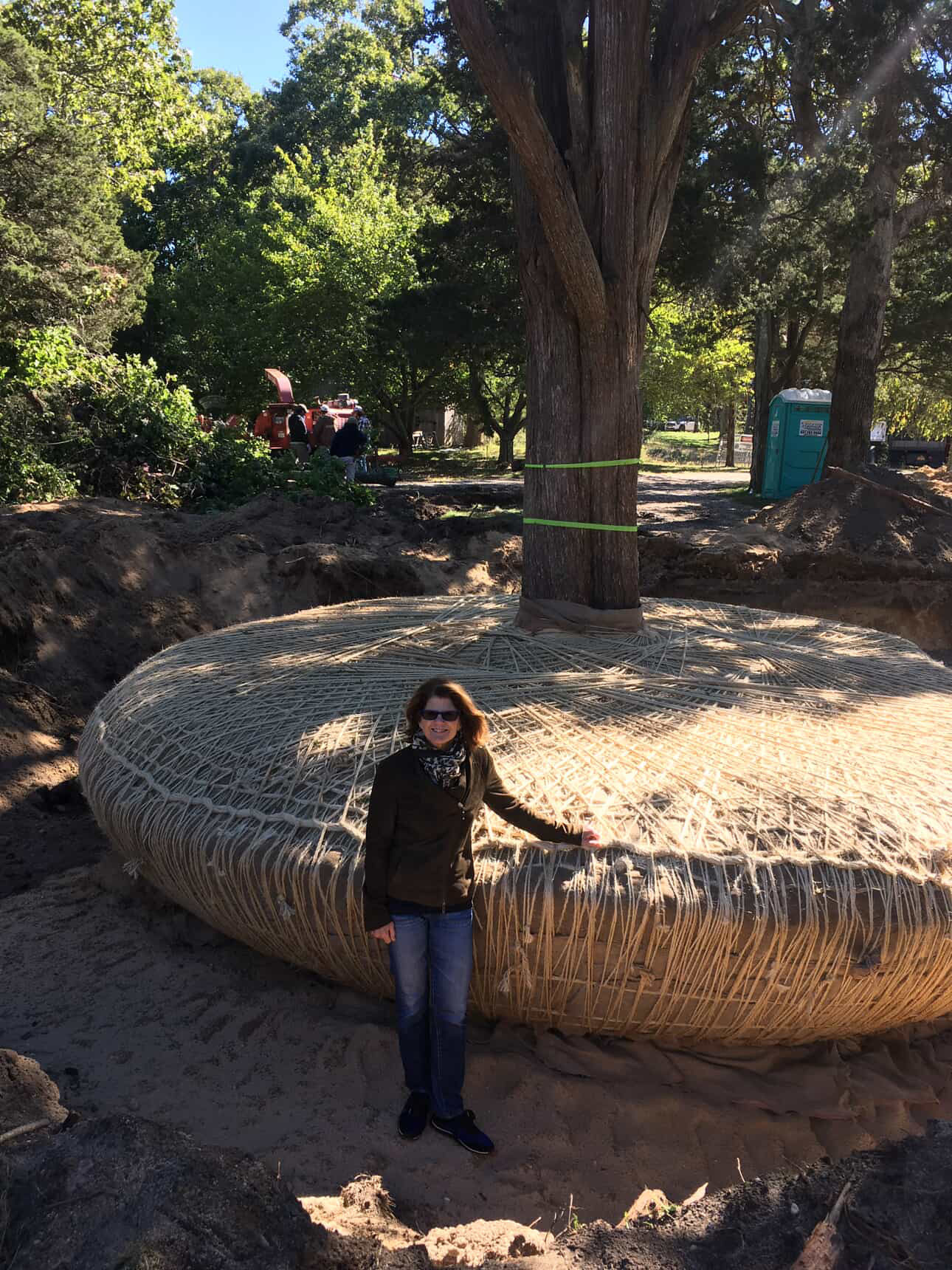
As Kathleen King walked me through her experience purchasing her land, I realized we had more in common than I expected. After closing on the property, she was devastated to learn that nine of the property’s cedar trees, the ones she cherished most, would need to be cut down to make space for her new sanctuary. These trees were the very reason she chose this land. They had been there long before her, and if she had anything to say about it, they would remain long after. In early conversations with her landscape design firm, she learned there might still be a way to protect the cedars she loved. It would require care, commitment, and trust. She was willing to try.
About eight years ago, I had the opportunity to purchase over a quarter of an acre in Jarabacoa, in the mountainous region of the Dominican Republic. My partner at the time and I chose the land specifically because of one tree. Standing proudly in the center was an old avocado tree, one of the largest I had ever seen. Majestic and resilient, it had survived freezing seasons and countless hurricanes. It did not bear fruit, since it was too cold at that altitude for that, but that did not matter to me. I imagined hanging a big swing from its massive branches, picturing my partner and me growing old together and returning every season to sit beneath it. Unfortunately, after a series of decisions made without my involvement, the tree had been completely removed by the time I visited the property again.
Hearing Kathleen speak about her cedars brought that memory back to me. Her calm determination and gratitude reminded me of my own heartbreak, yet filled me with overwhelming joy for her. I felt connected to her instantly. Kathleen was not handed anything in life. She worked tirelessly for all that she has. From an early age, she was taught that effort was essential to success, both in life and in spirit. She worked year-round, even during Christmas, learning early that dedication was its own kind of faith. Opening her shop in a place where entitlement and wealth can easily shape people into versions they never intended to become, she remains grounded in who she is and where she comes from.
Watching the Water
Kathleen and John DeFaro grew up together in the Hamptons on the Eastern End of Long Island, sharing countless memories, including attending college together at SUNY Cobleskill in upstate New York. She studied food service administration, while he initially pursued culinary advancement with professional chef studies. They kept in touch throughout the years, forging a lifelong friendship.
Both emerged from a landscape defined by effort, not excess, in a Hamptons community where workers, farmers, gardeners, and artists mingled naturally with the world that surrounded them.
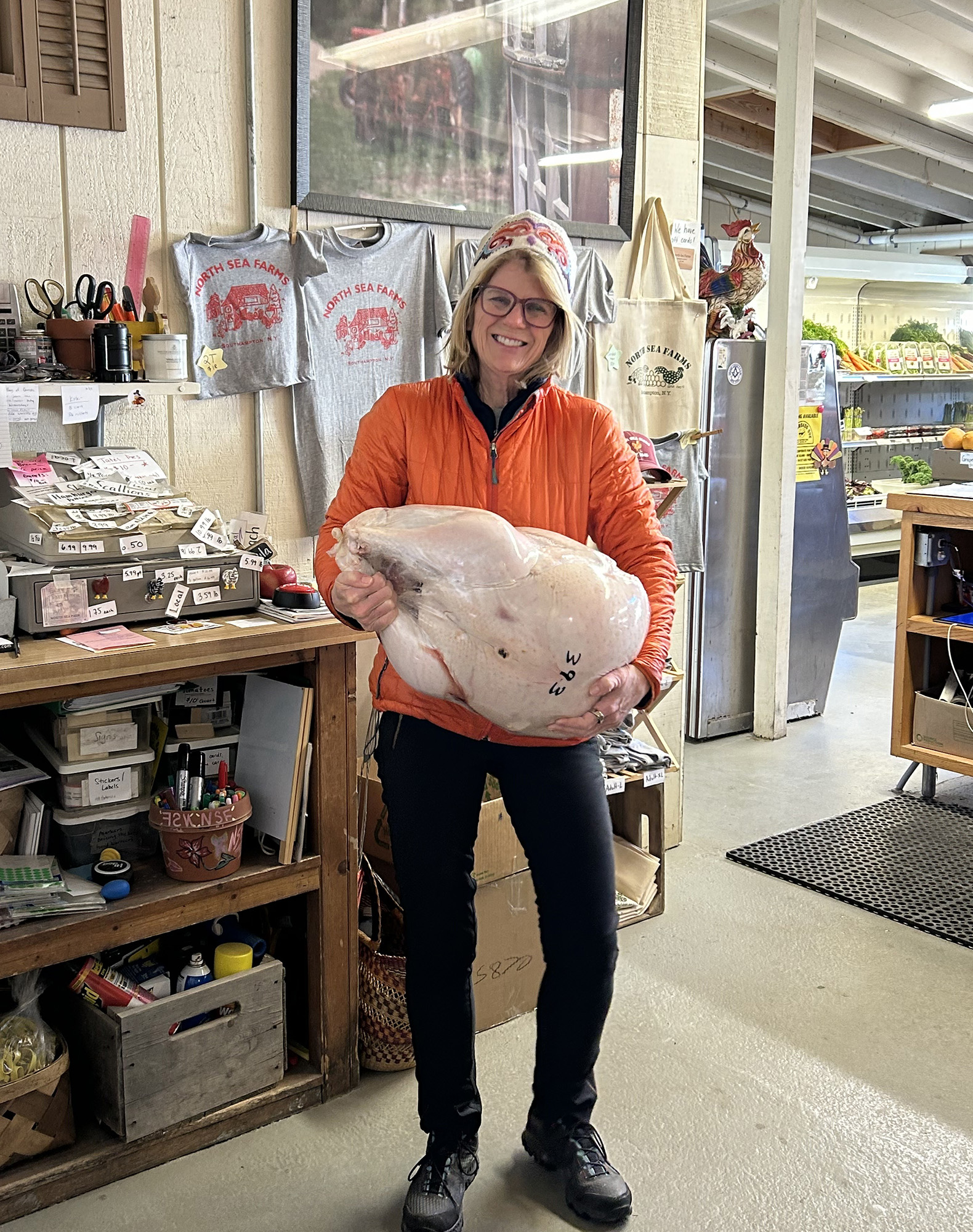
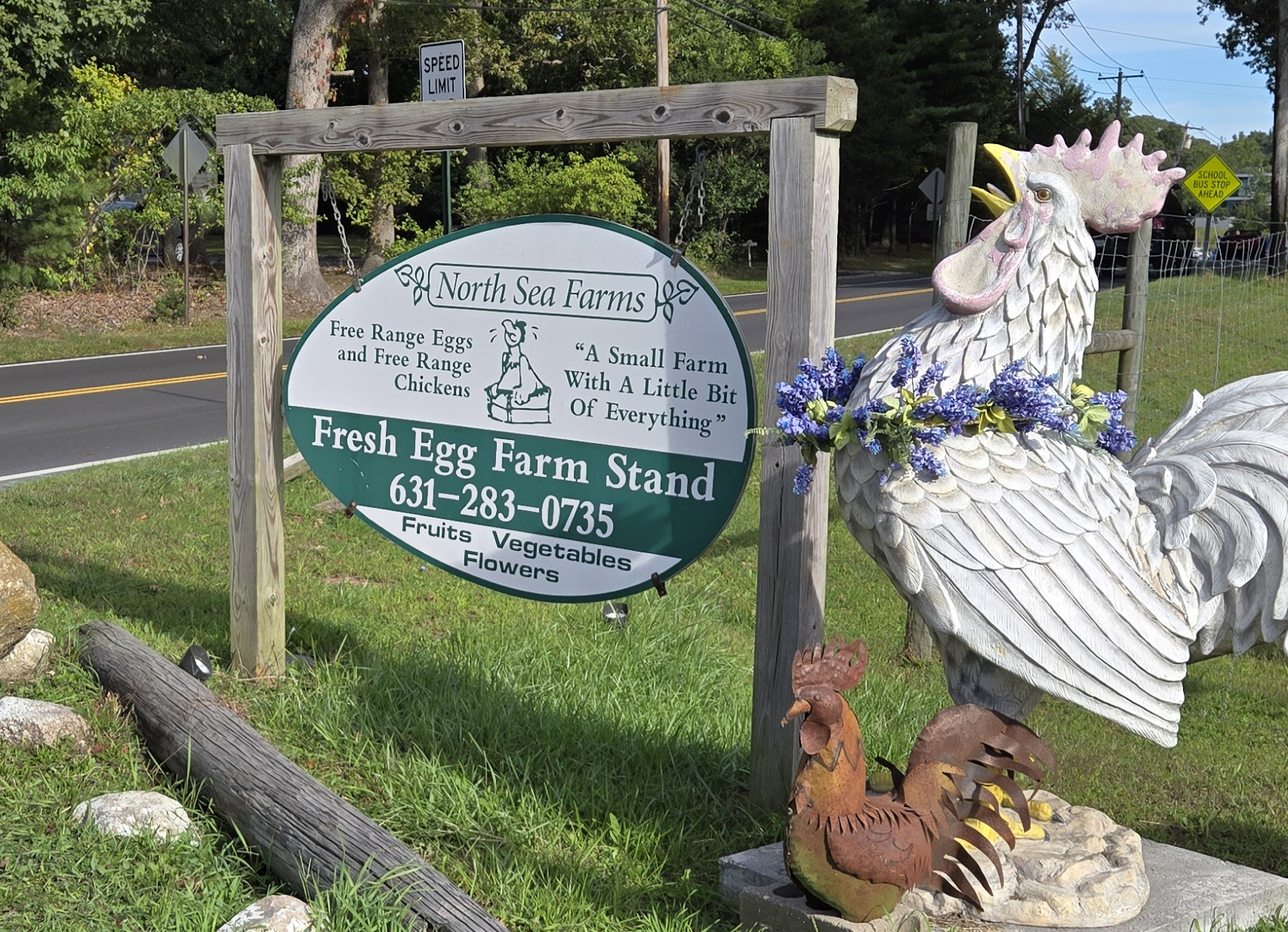
Kathleen King came from a family woven deeply into that landscape. Her mother, Millicent, known to everyone as “Millie,” was a registered nurse who began as a private duty nurse and later worked in the ICU ward. After retiring, she continued to serve her community as a volunteer at Southampton Hospital and offered small, intimate acts of care, such as shaving patients. Kathleen’s father was a hardworking farmer whose life centered on the rhythms of their renowned North Sea Farms, a family operation celebrating its 80th anniversary this year and still grounded in local sourcing and honest labor. It was in this environment of steady care and daily work that Kathleen first learned the values that would later shape her own path.
In time, she founded what would become Tate’s Cookies, naming the beloved buttery creations after her father, Tate. From the beginning, Kathleen refused to compromise on what made her cookies unmistakable. She never gave in to the trend of a soft or chewy cookie. She held fast to the thin, all-crisp texture that carried real butter in every bite, the kind of crispness that felt like an after-school treat cooling on the counter. That bright, clean snap became her signature. What started in her small local bakery grew into a nationally recognized brand that carried her Long Island childhood into daily lives across the country. She eventually sold the company in 2018 and chose a quieter life shaped by land, community, and the principles she never stepped away from.
https://northseafarms.com/
Under the Cedars
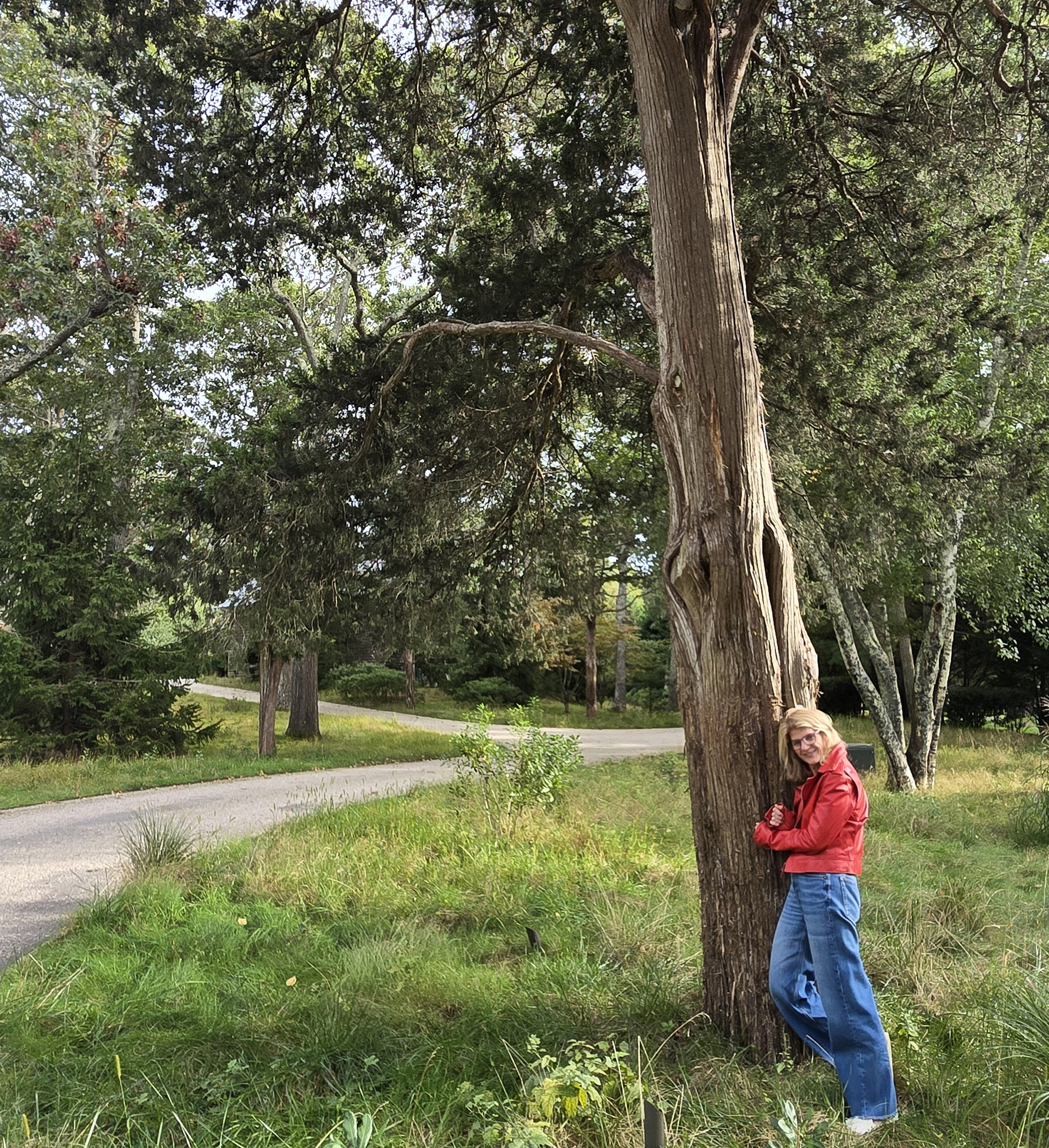
When Kathleen purchased her bayfront property overlooking Peconic Bay, she stepped into what would become the celebrated Cedar Crest project. The land was defined by a stand of mature Eastern Red Cedars (Juniperus virginiana) that shaped the entire sense of place. Most new owners would have removed them, but Kathleen, whose instincts run green, chose a different path.
She partnered with LaGuardia Design Group of Water Mill to relocate nine of the property’s cedars. The collaboration reflected a shared ethic: preserve, reuse, and respect what already thrives. Together they planned the transplant with precision, protecting the trees’ deep root systems and the delicate balance of the site. She wanted them moved and replanted together, in one continuous effort, so their long-shared life in the soil would not be broken.
That shared ethic guided Cedar Crest itself, which earned LaGuardia an ASLA NY Merit Award in 2022 for its creative reuse of existing landscape elements. On this very property, century-old cedars were preserved, repositioned, and arranged into a new grove surrounded by native grasses and a natural buffer of beach plum and bayberry.
https://www.aslany.org/awards/cedar-crest/
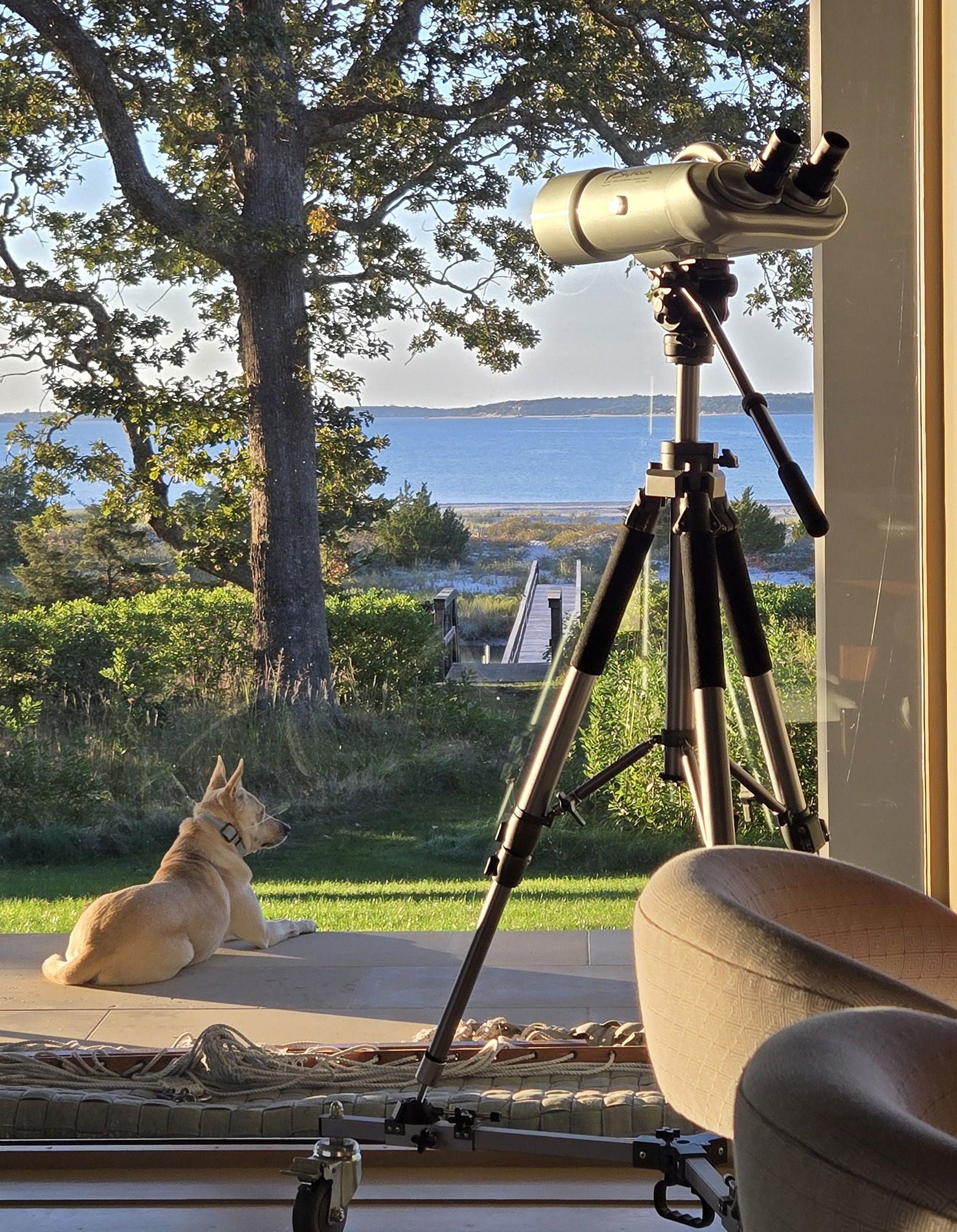
The result is an act of ecological choreography, a quiet duet between human intention and natural endurance. Today, the grove forms a living corridor between house and shoreline. It is a refuge for birds and shade for her beloved rescue dog, Calle, who pads softly beneath the branches, part of the property’s ongoing conversation with the bay.
Bay watching
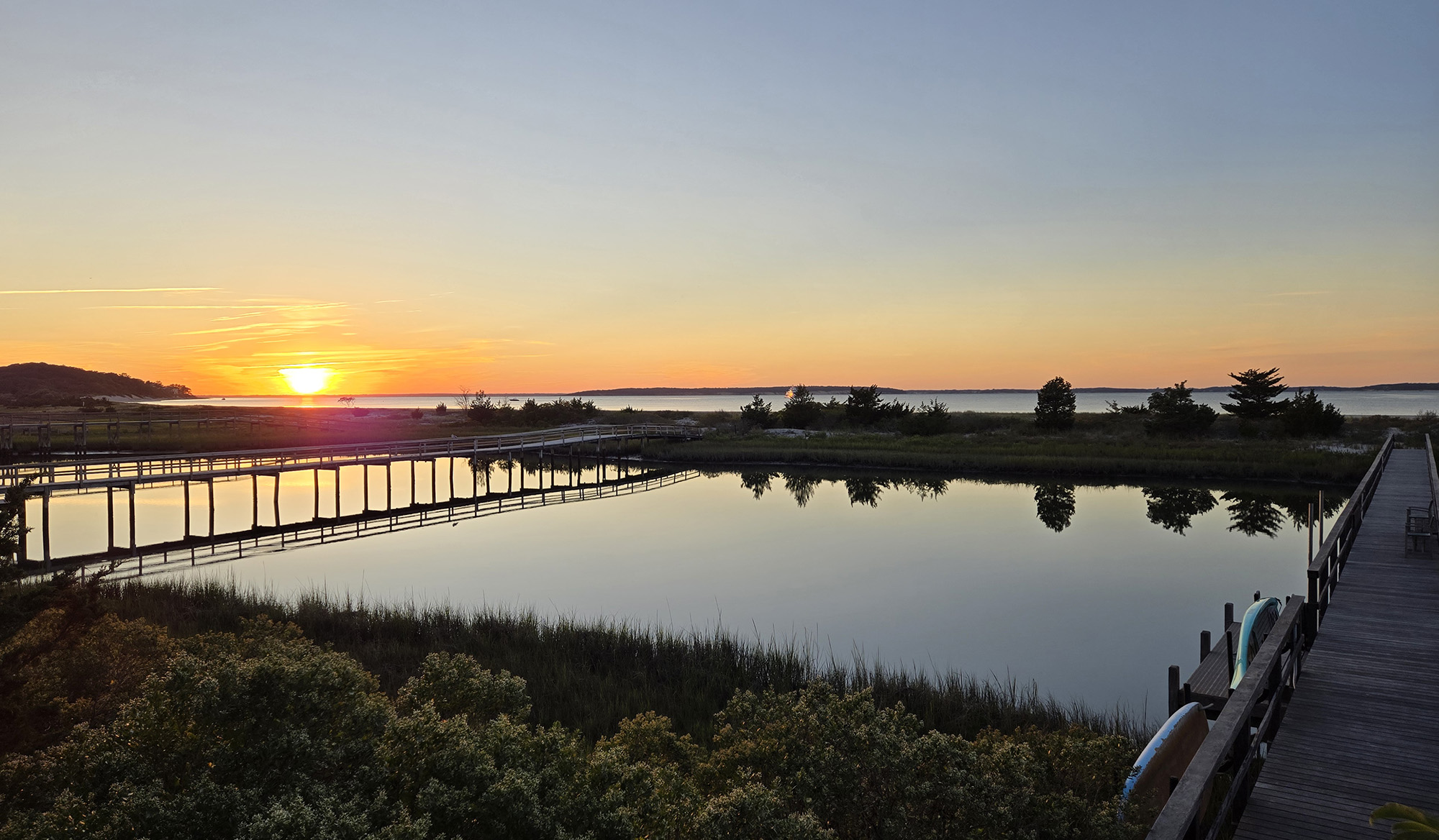
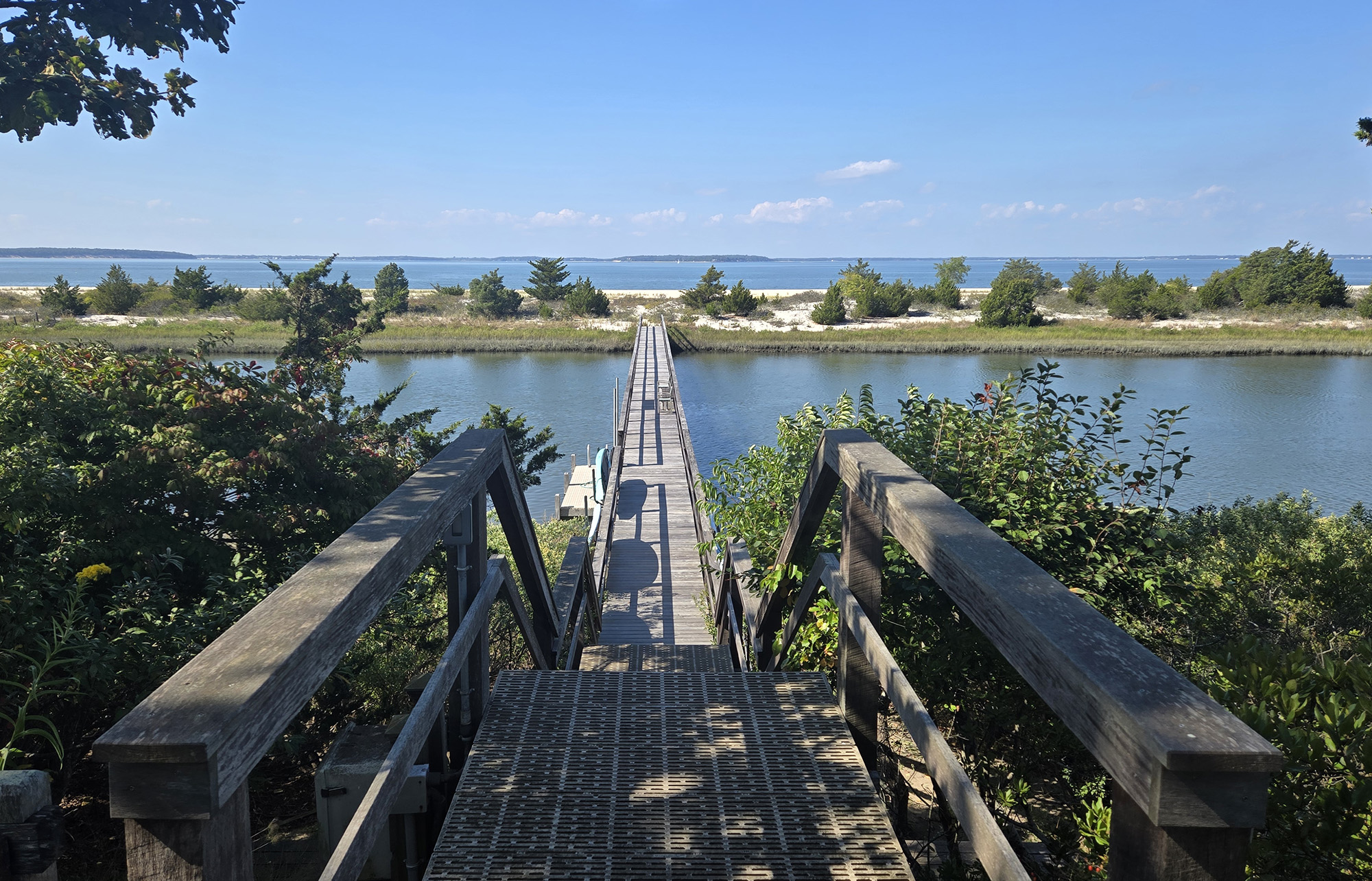
Inside the living room, a floor-standing binocular telescope rests before the wide light of Peconic Bay. Between the property and the bay, a coastal creek drifts quietly toward the open water and slips beneath long wooden walking bridges that lead to the wide, calm bay beach. In early summer, the base of the weathered osprey platform glows with the pink blooms of Rosa rugosa, marking the arrival of the season. From that window, Kathleen can look across the water to the North Fork of Long Island and Greenport, where John was born. She herself was born at Southampton Hospital, closer to the village and a mile from the Atlantic Ocean beaches.
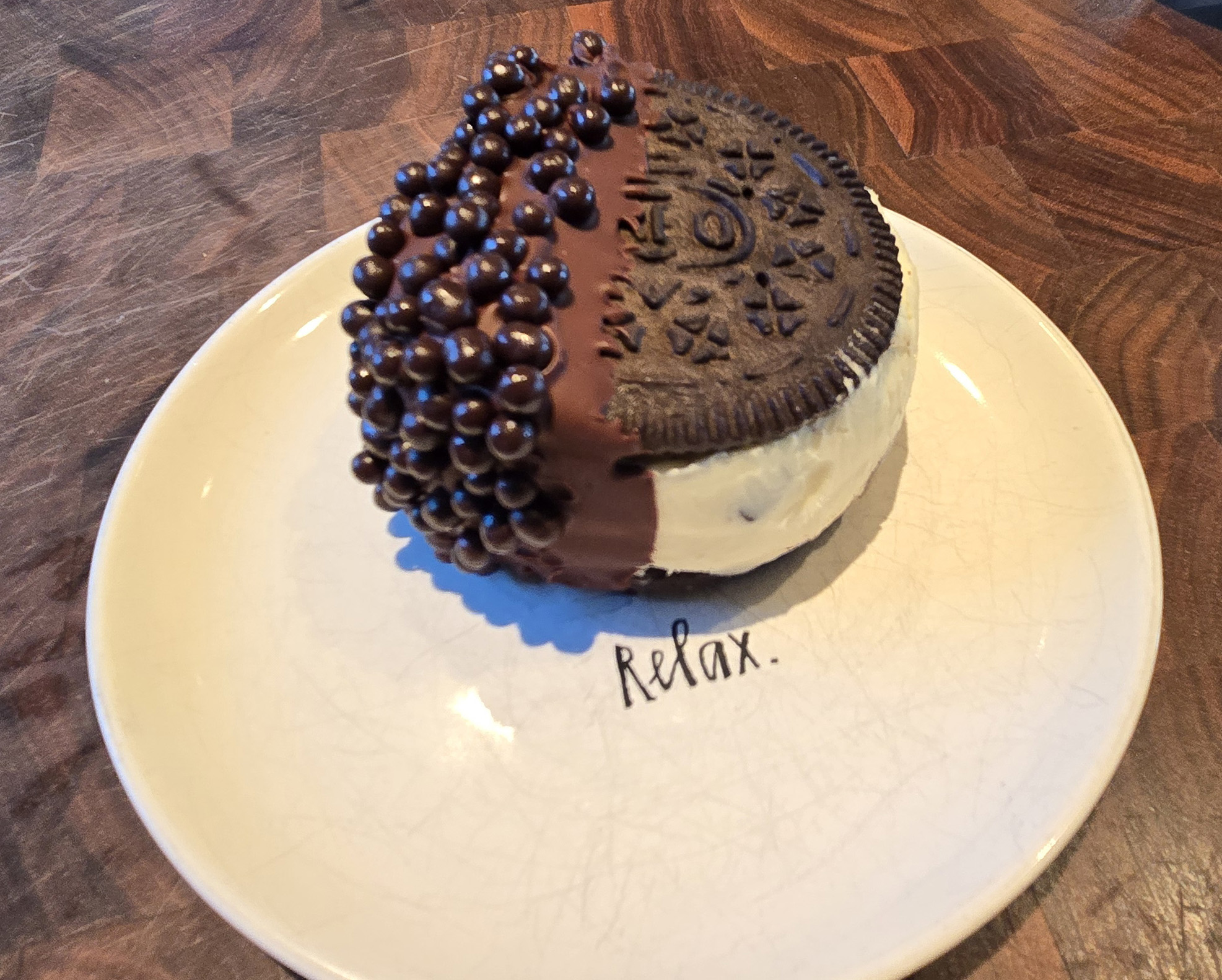
During John’s recent visit in September 2025, they spent long afternoons near that window talking about food, the changing weather, and the fragile state of the planet. Not far from the telescope, Kathleen’s open kitchen kept its own quiet pulse, generous, inventive, and always ready to nourish. At any hour, she would appear with something playful and irresistible, including a gloriously oversized homemade Oreo ice-cream sandwich, a full rampage of flavors tucked between two proud cookies. John would cringe with anticipation, then surrender with a grateful “Yum,” a small joy in a world recalibrating under climate stress.
Their conversations often drifted toward the care she extends beyond her home. “I am a big supporter of the Peconic Land Trust, which preserves open space and farmland for food production,” she said. “I also support Turtle Rescue of the Hamptons in Riverhead. They rehabilitate turtles and return them to the wild. And I support Akashinga in Africa, an organization that trains women to defend rhinos against poachers. It empowers women to escape poverty and protect animals because they’re so bad ass.”
The telescope, the ospreys, and the slowly shifting light across the bay became part of their shared rhythm. Observation turned into a ritual. Beauty, they agreed, is never separate from responsibility.
That same September visit also carried John beyond the property and back into the pulse of New York’s art world.
A Return to Art
During these same early Fall days in September 2025, while staying with Kathleen at Cedar Crest, John carved out time to reimmerse himself in Manhattan. “When I am back on Long Island,” he says, “I always make time for the city.” From Southampton, it is a two-hour drive, enough to transform the landscape from marsh and meadow to skyline and sound.
At the Guggenheim Museum, he visited Rashid Johnson’s exhibition A Poem for Deep Thinkers, where living plants hung in burlap root balls (B&B) from the museum’s soaring atrium. The installation blurred the line between architecture and empathy, a living sculpture that required the institution itself to care for what was alive. Fresh from walking among Kathleen’s transplanted cedars, the resonance was profound. Both experiences were about attention and the quiet labor of keeping life sustained.
John also visited MoMA, where Sasha Stiles: A Living Poem merged human imagination with artificial intelligence to create a constantly evolving text. One screen displayed the line: “In the garden of my mind, a seed remembers green.” John photographed it, a sentence that felt like a mirror to his own practice and to Kathleen’s living garden on the bay.
Saving the trees and moving them together was not just a practical choice. It was an act of reverence. It was a gift she accepted and offered back to the source that guided her. She chose to preserve life simply because it was the right thing to do.
And maybe that is the lesson. When the opportunity to rebuild or recreate arises, perhaps the wisest step is to pause before we demolish. To consider the history, the life, and the quiet magic already present. To enhance, not destroy.
Explore the growing space of Green Religion where stories connect us, creativity leads to awareness, and climate justice remains at the core.
We value your privacy. Your email address and personal information will be used solely for sending updates from Green Religion. We do not share your information with outside parties, and you can unsubscribe at any time.