
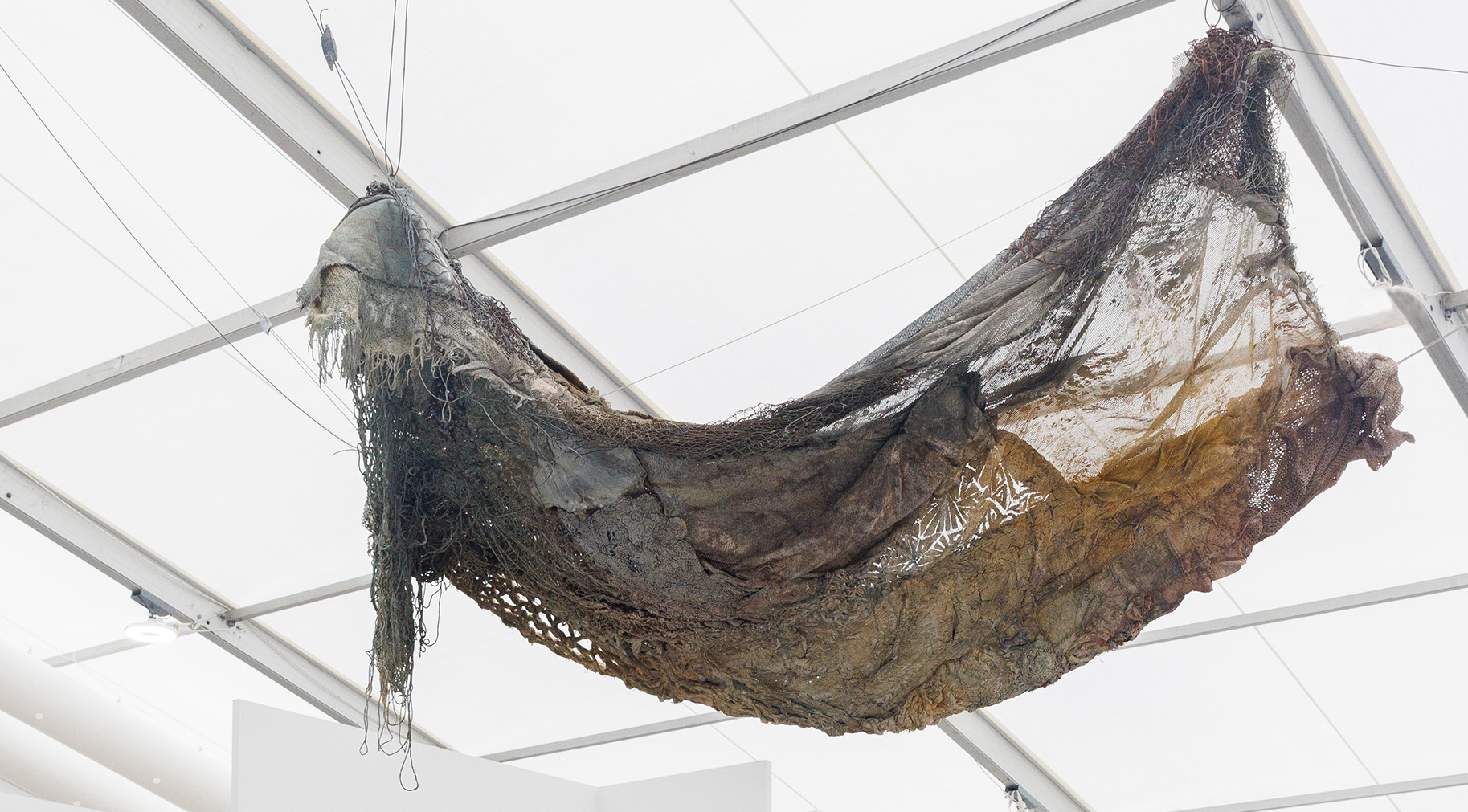
A lineage marked by flight, survival, and the quiet force of memory becomes the ground from which Karla Kantorovich builds her practice. Here, the past is not an anchor but a pulse.
“Everything wears down. Objects, things in nature, our bodies, are impermanent. All things are in a constant state of becoming and dissolving. I find beauty in imperfection, in the passage of time, in the rusty and old, even in decay. I understand deterioration as part of the process of life, the circle of nature, the death of the physical. I enjoy objects at the moment of fragility when they are approaching nothingness.”
Karla Kantorovich
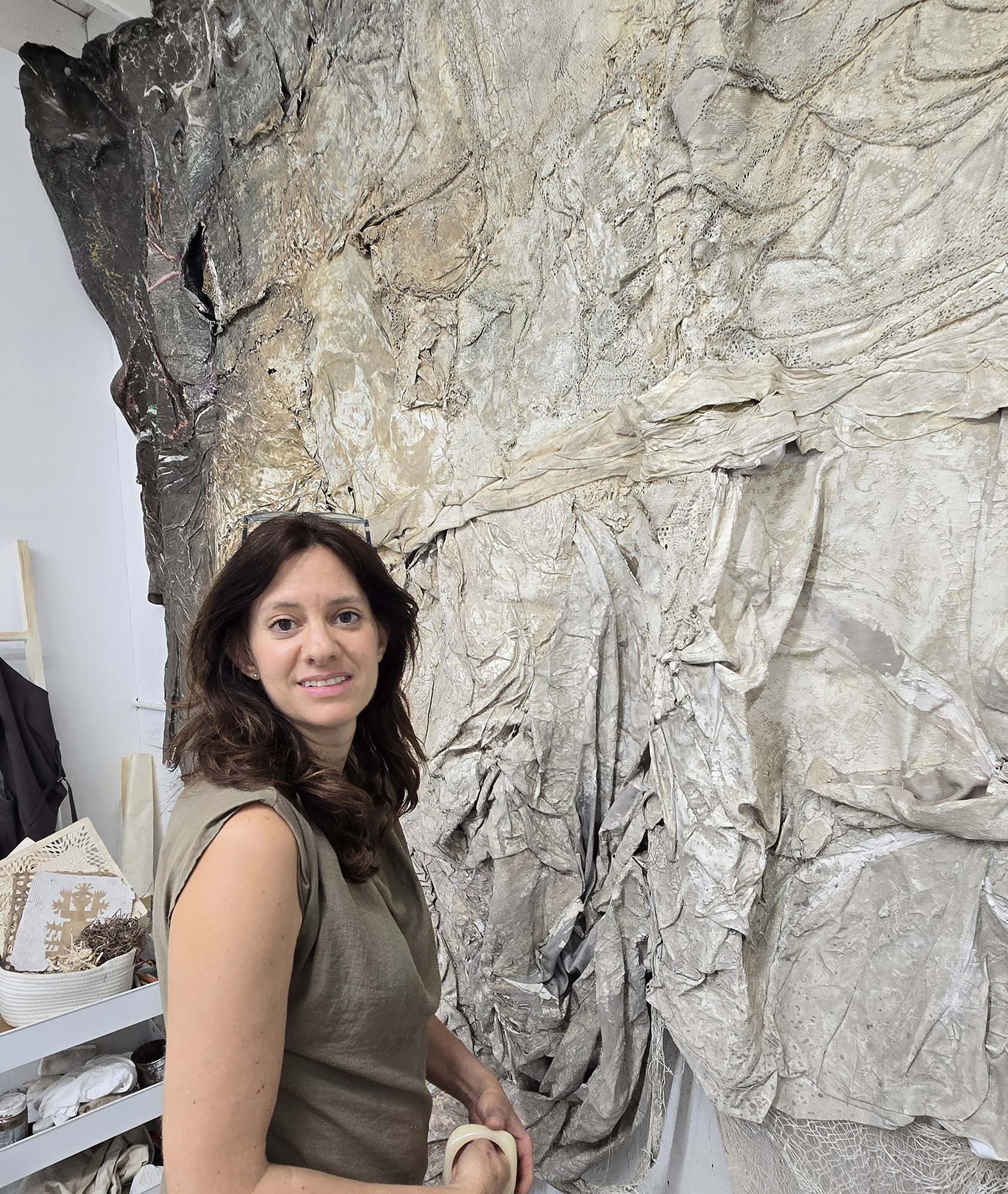
For Karla Kantorovich (b. Mexico, 1975), artmaking is both an act of remembrance and renewal, a way of looking back while moving forward. Her work explores generational memory, focusing on her grandmother, a Ukrainian refugee who fled to Mexico. This woman was displaced during World War II to escape the Nazis’ “Final Solution,” “Endliche Lösung” or “Endlösung.” This abbreviated term was used before Hitler’s order of systematic genocide of the Jews. Also included in this “cleansing” was the murder of Gypsies, gay men, people with disabilities, the Slavic peoples, political opponents, Jehovah’s Witnesses, and Soviet P.O.W.s. The Nazis aimed to displace Jews through emigration and deportation, as understood at the time. At the Wannsee Conference of 1942, the goal became the systematic extermination of Jews across Europe, leading to the Holocaust. Ninety percent of Polish Jews and two-thirds of Europe’s Jewish population were murdered. Kantorovich’s work responds to this inherited trauma.
Kantorovich does not dwell in darkness. She transmogrifies objects into the aspiration of spirit, of light, of the act of humanity, and of compassion and kindness.
Materials That Remember
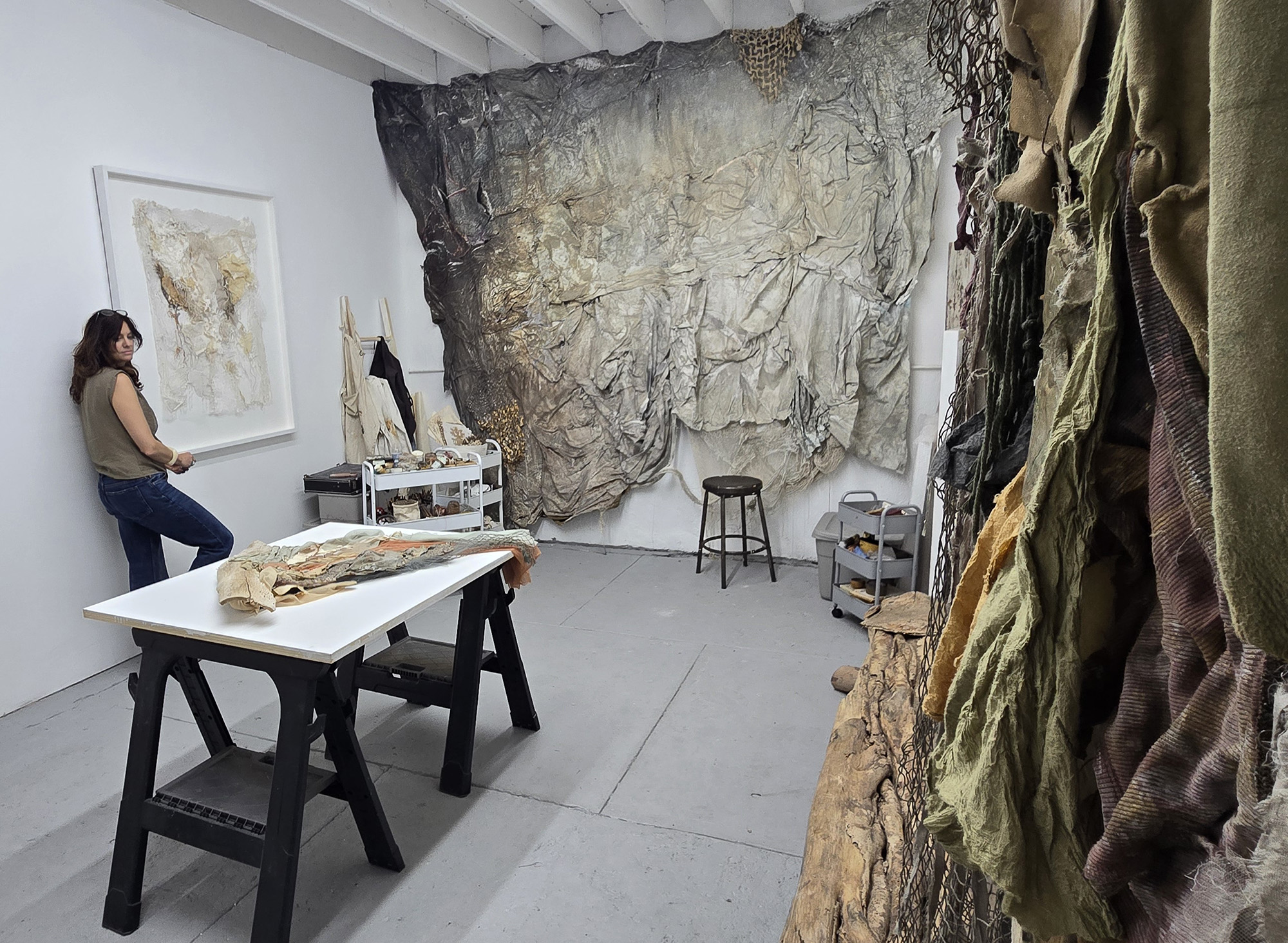
Discarded fragments, pigments of earth, and the tender weight of time gather in her hands. Through ceremony and patience, she transforms what has been broken into forms that breathe again.
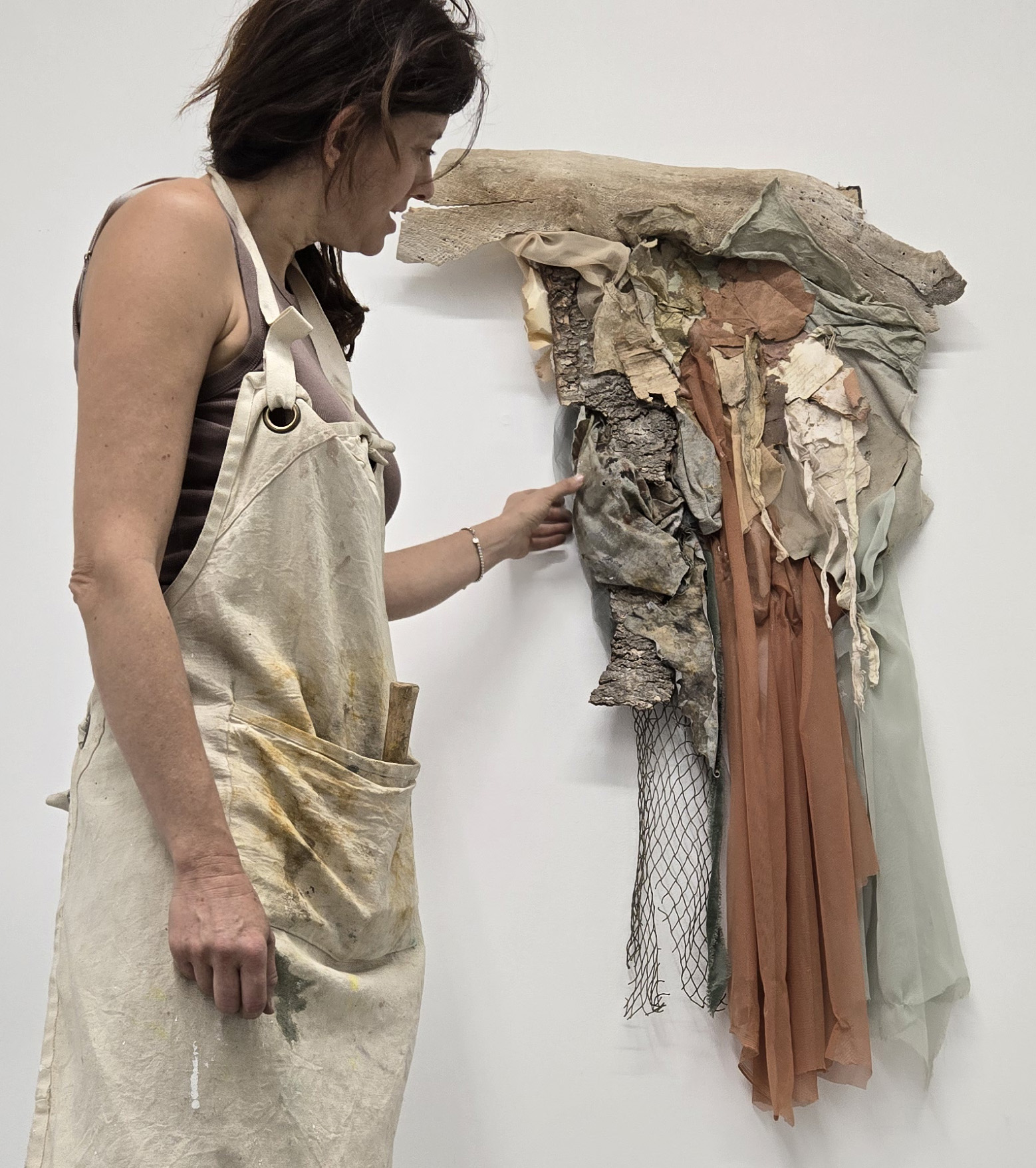
For Kantorovich, the act of making art lives in the realm of the ceremonial. She transmutes the ordinary into the sublime through materials and processes. Found objects, fragments of paper, and earth pigments are her vehicles for transformation. Her installations create this realm, offering spaces for reflection and healing. The act of combining materials, memories, and gestures creates the conditions for what she calls “magic”: a moment when the physical world and the unseen briefly align.
Her relationship with materials connects her practice to one of humanity’s oldest communicative impulses: the use of pigments in image-making. People began using color more than 300,000 years ago, grinding minerals such as ochre and charcoal to mark caves and bodies. Over time, pigments evolved from simple earth tones to complex synthetics. Ancient Egyptians invented Egyptian blue, the first man-made pigment, while Greeks and Romans refined the preparation of color using minerals such as malachite and cinnabar. By the Middle Ages, Ultramarine and Vermilion pigments were available yet rare and sacred, reserved for holy images. The Renaissance expanded access to color through trade and experimentation, and the “oil technique” was developed by Antonello da Messina, forever affecting the act of making and history of art. In the 18th and 19th centuries, industrial processes produced new colors: Prussian Blue, Cobalt, and the Cadmium pigments. Without this development, Impressionism, for example, as well as Fauvism and Color Field Painting, would not exist as we know it. Today, pigment research continues to explore sustainability and environmental responsibility, returning to the earth-based origins of color that Kantorovich instinctively embraces.
The artist’s color choices evoke the earth, or terra: browns, ochres, rusts, and grays. These are the colors of soil and stone, of things that grow and decay, and Kantorovich’s process addresses natural cycles. She collects and reuses discarded materials, shaping them into layered compositions that evoke the geological strata or the ruins of ancient civilizations. Each piece seems to hover between creation and disintegration, capturing what she describes as “the moment between being and non-being.”
Her forms reject the straight lines and hard edges of architecture. They follow nature’s patterns, reflecting erosion, sediment, and growth. This sensitivity to the natural world stems from an understanding that the earth itself holds memory. The vibration of plant life, now measurable by science, aligns with her belief that all matter carries energy. Her work channels this awareness, reawakening a sense of connection that modern life snuffs.
By using found and recycled materials, her approach slows the cycle of consumption by giving discarded matter a second life. Each piece becomes a quiet critique of the global waste economy, suggesting repair as a form of resistance. In the context of the environmental movement, her art restores value to what industrial culture considers useless. It echoes the pre-industrial relationship between humans and resources, when the natural world was viewed not just as raw material but as a collaborator. She engages us in a visual conversation and a spiritual dialogue.
Renewal as a Creative Act
Kantorovitch’s installations move between grief and light, decay and regeneration. In her world, repair becomes resistance, and beauty rises from what might have been forgotten.
At a time when the planet faces increasingly accelerated climate disruption, Kantorovich’s practice invites reflection on the fragility of ecosystems and the interdependence of life. The same processes she studies, decay and erosion, are now unfolding on a global scale. Her installations remind viewers that destruction and regeneration are inseparable and that survival depends on cooperation with, not dominance over, the environment. By framing impermanence as a subject itself for the Western mind, she offers an alternative to the culture of supposed permanence and rapacious accumulation that has led to the ecological crisis. Her work is both a personal testimony and an environmental philosophy. It is a call to seek beauty not in the endlessly new, but in what endures.
Her perspective aligns with the growing trend in architecture and design that echoes, rather than dominates, the natural world. Modern architects increasingly draw inspiration from organic structures and materials that blend with their surroundings. Instead of enforcing rigid geometric control, this approach emphasizes flow, permeability, and connection to the landscape. This shift recognizes that human well-being is connected to the health of the planet. Spaces that honor natural rhythms aim to support mental and emotional balance. They restore a sense of belonging to the larger ecosystem, countering the alienation caused by the mechanical environments of the twentieth century. This philosophy is reflected in the writings of educator and philosopher Rudolf Steiner, whose theory rejected right angles in architecture, believing that harsh, straight lines imprison the mind. Instead, he promoted the use of organic forms and asymmetry that reflect the flowing, living energy in nature. This idea is most evident in buildings like the Goetheanum in Switzerland, the center of his teachings, where he designed everything from the structure to the furniture to embody these flowing, non-geometric principles.
Kantorovich’s art shares this architectural impulse through immersive environments. Her installations can be seen as miniature ecosystems that embody principles of the cycle of life. They reject the illusion of permanence and instead embrace a cyclical logic in which growth and decay coexist. Her process and the broader movement in design reveal a shared understanding that harmony with nature is not a retreat from progress but a path toward long-term survival.
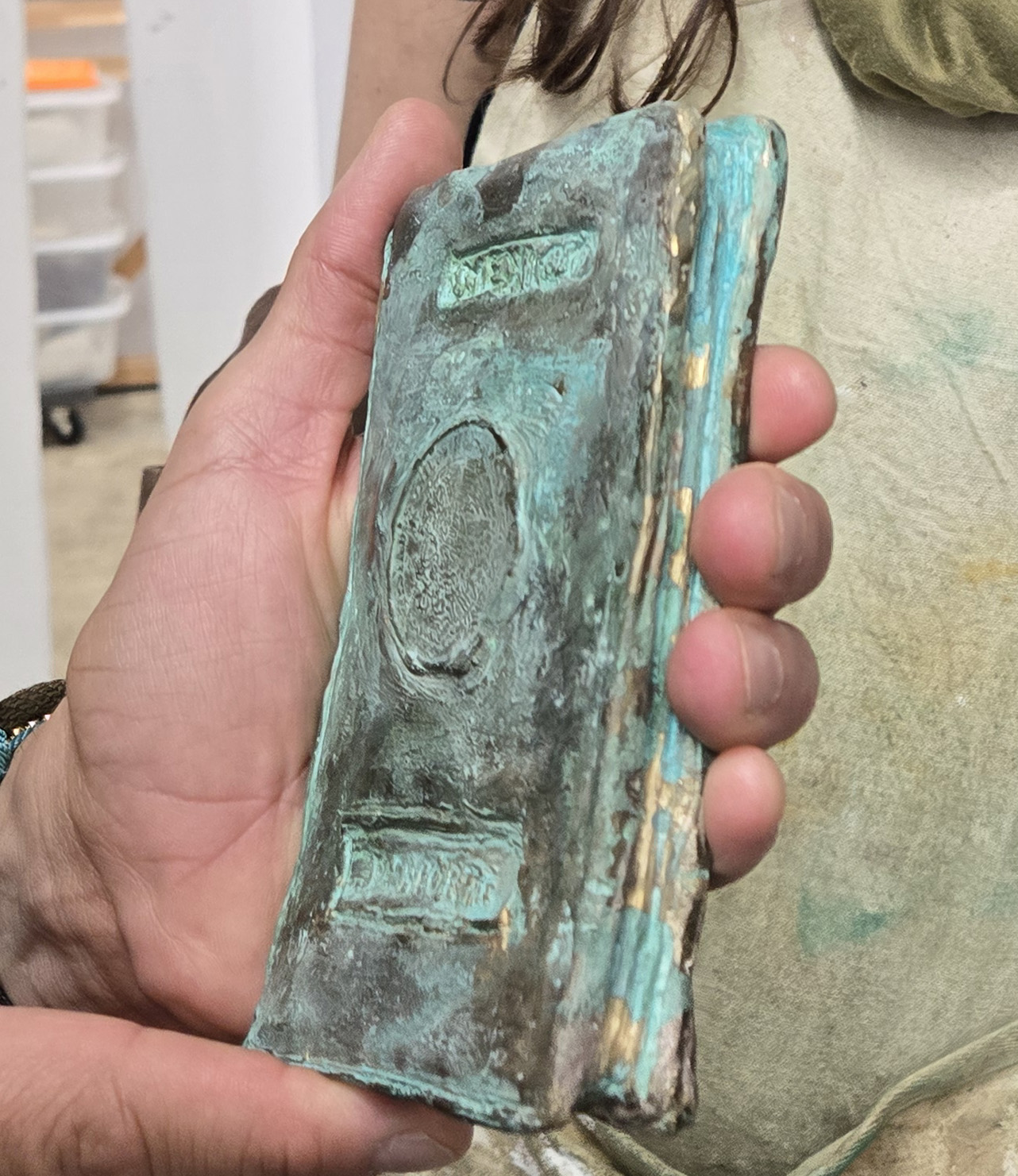
To Kantorovich, the materials themselves bear witness. They are not new. They were not purchased for their purity or perfection but gathered for their history. “The materials I use tell a story,” she says. “They have been places. The wear and tear make them valuable to me.” She revives what has been discarded, giving it new purpose. Her process of mending and layering becomes an act of repair, both literal and symbolic. Each surface bears marks of time, resembling scars that she does not conceal but honors as evidence of endurance.
This philosophy connects her work to artists such as Christian Boltanski, whose installations memorialized loss through everyday materials such as photographs, clothing, and light. Boltanski’s practice, deeply influenced by the Holocaust, sought to preserve traces of lives erased by history. Similarly, Kantorovich’s art weaves together the persistence of memory and the human capacity to rebuild. Yet where Boltanski often focused on absence, Kantorovich leans toward regeneration. She acknowledges destruction and then insists on renewal, a theme that also connects her to German artist Anselm Kiefer, who seeks to confront his country’s history.
Her recent projects, including Ámate and Reclaiming Poetry, extend this dialogue between history, material, and transformation. Ámate draws inspiration from traditional Mexican amate paper, made from the inner bark of trees. Using recycled, locally sourced fibers, she creates immersive installations that invite visitors to move through environments of suspended paper forms. The process recalls both ancient craftsmanship and ecological awareness. The title Ámate plays on the Spanish phrase “ámate,” meaning “love yourself,” offering the work as an opportunity to heal and to honor self-recognition.
In Rewriting and Reclaiming Poetry, Kantorovich explores how reality can be reshaped. “Much like paper,” she writes, “reality can be rewritten and reassembled. It is fluid and ever-changing.” These works combine fragments of the old and the new, the natural and the artificial, to form unified structures that mirror the complexity of human experience. By layering surfaces and textures, she builds a visual language of restoration. Kantorovich turns vulnerability into strength.
Although her work grows from personal history, its message extends beyond biography. It addresses the broader disconnection between humans and the natural world. Kantorovich contrasts modern life’s obsession with permanence and control, our desire to resist aging, decay, and imperfection, with nature’s organic acceptance of change. “We plump, lift, erase, augment, reduce our living bodies as if time and nature don’t exist,” she notes. Her art stands as a quiet resistance to this denial.
Kantorovich’s own family history embodies resilience. From one grandmother who fled persecution came sixty-three descendants, essentially a small village, born from survival. The artist’s art honors that legacy, turning inherited pain into creative continuity. In her words, “While I’ve always promoted healing, love, and reconciliation, I’ve realized confronting struggles is essential for true healing.” As antisemitism resurfaces in contemporary life, her artwork serves as a reminder of history’s lessons and the necessity of vigilance against hatred.
Karla Kantorovich’s art does not ask us to believe in magic. It demonstrates it. The transformation of fragments into unity, of loss into presence, and of memory into renewal is the magic she performs. Her installations reveal what endures when the surface erodes: the quiet persistence of spirit, the shared memory of survival, and the unbroken thread connecting matter, memory, and meaning.
“While darkness may persist, it’s imperative that our light shines even brighter.”
Karla Kantorovich
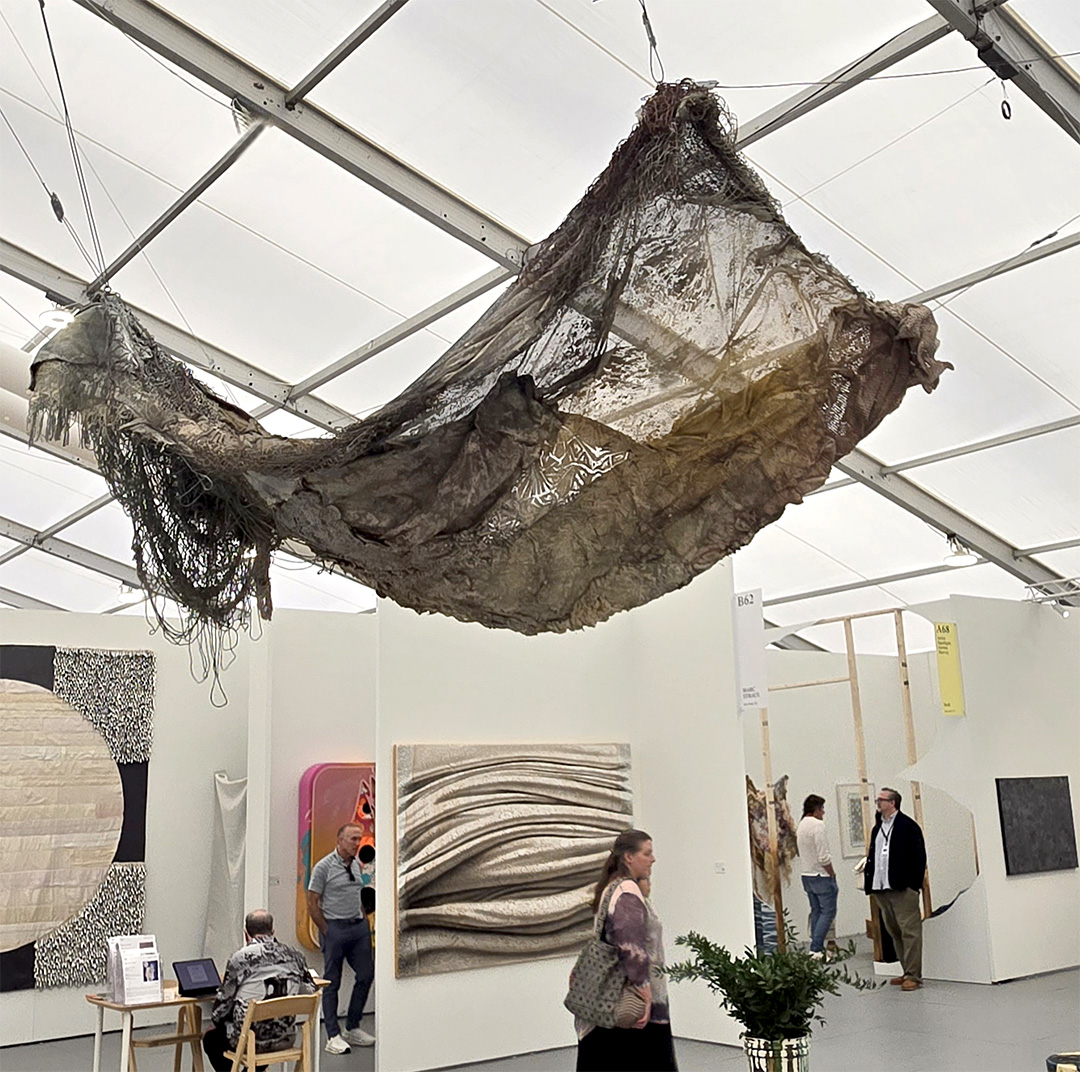
Karla Kantorovitch, Special Projects at UNTITLED Art Fair. Miami Art Week 2025
Section SP18
Karla Kantorovich
Transient Nature, 2019-2025
Mesh, textiles, yarn, bark, leaves, gesso, pigments, and found objects.
Presented Dimensions Variable (A91) https://untitledartfairs.com/fair-guide
Karla Kantorovich Dimensions Variable Studio https://dimensionsvariable.net/artist/karla-kantorovich/
Green Religion is listening—whenever you’re ready.
Explore the growing space of Green Religion where stories connect us, creativity leads to awareness, and climate justice remains at the core.
We value your privacy. Your email address and personal information will be used solely for sending updates from Green Religion. We do not share your information with outside parties, and you can unsubscribe at any time.